MOVIE
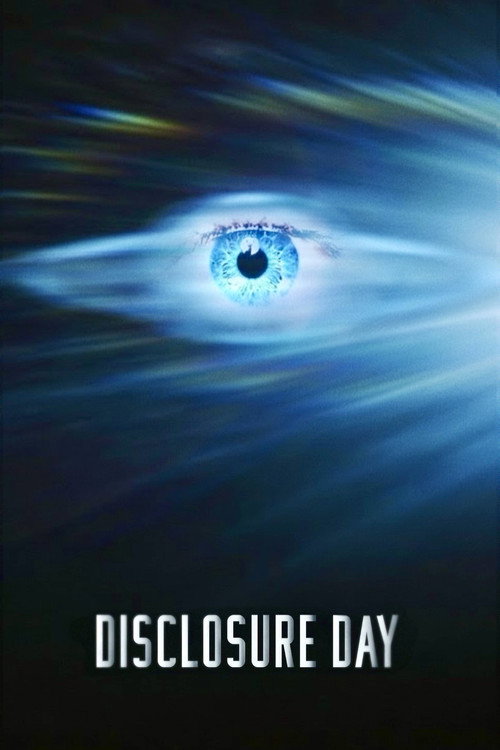
Disclosure Day
…
2026
Spielberg utilizes the pop veneer of David Koepp's gobbledygook script involving deep state agencies, shared telepathy, and repressed trauma as a genre basis for the purpose of ultimately reckoning with his own brand of spectacle. Akin to the auto fiction of The Fabelmans, Disclosure Day reveals an American showman troubled by the seductive power of images, even those that visualize the truth. In a film teeming with the incessant glow of phone screens and computer monitors and the everpresent threat of surveillance, what lingers about this film is its physicality - the handmade detail of Margaret's childhood home, every clasped grip on those alien devices, Daniel fumbling through various thumb drives of the utmost importance etc. This film is just as indicative of 2026's social climate as War of the Worlds and Munich were for the mid aughts. It's the end of the world as we once knew it, but Spielberg is pleading for us as a species to at least be present for it.
The formal craft on display is so unrestrained here that viewers less convinced of its merits will say that he's overcompensating (there's a wild oner in the middle of this movie that felt less like traditional blockbuster coverage and more like a Metal Gear stealth sequence). Keopp's writing is messier than usual but productively so - this is a movie of distinct rhetorical questions, and the connective tissue on a logistical level is almost nonexistent. The aim feels entirely devoted to pure emotionality, so if you aren't feeling it, there's little else to hold onto.
But what emotion! Spielberg's relationship to intertextuality has never been subtle but bringing his maukish sensibilities back into the contemporary landscape is even more bracing than I imagined. Echoes of The Post, A.I. Artificial Intelligence, and Close Encounters are there if you dig, but even beyond Spielberg's films, this fits right alongside Mysterious Skin and Communion (1989) as a work that grapples with the buried pain within ourselves. You can see why the studio was struggling to market this, even to the point that they tossed Spielberg out on the podcast circuit to put pressure on the wound - it's less of a slam-bang summer blockbuster and more of a reflective late work, attuned to the rhythms of grandiose sentiment.
Even still, there's no shortage of great moments here, gestures that had me levitating, sequences that don't really function as anything other than magnificent lyrical expression. Margaret holding her hand against the strings of a piano during a panic attack, the cross-cutting during the extraterrestrial experience, even the first sighting of the cardinal - it encapsulates our limitations when faced with a vast unknown. Every actor is game here (really inspired supporting turn by Courtney Grace as the third act newscaster) but it's Emily Blunt who takes over the whole picture, her performance infused with a strange comic intensity that frequently slips into fits of spiritual terror. It's a tricky role that she handles with grace and the right amount of audacity, which is fitting considering how downright odd this movie is.
I mean, right from the first frame (Spielberg's nod towards De Palma's (and Koepp's) Snake Eyes?!?), this feels like uncharted territory for Spielberg, even if the subject matter is familiar. Very interrogative. What does a post-Fabelmans picture look like? What is he saying after we finally got a movie that was directly about the thing that all of his other works were also about in roundabout ways (divorce)? Yes, this is a film about the production of The Fabelmans, but it's also concerned with the afternath of reconstructing what's most personal.
The formal craft on display is so unrestrained here that viewers less convinced of its merits will say that he's overcompensating (there's a wild oner in the middle of this movie that felt less like traditional blockbuster coverage and more like a Metal Gear stealth sequence). Keopp's writing is messier than usual but productively so - this is a movie of distinct rhetorical questions, and the connective tissue on a logistical level is almost nonexistent. The aim feels entirely devoted to pure emotionality, so if you aren't feeling it, there's little else to hold onto.
But what emotion! Spielberg's relationship to intertextuality has never been subtle but bringing his maukish sensibilities back into the contemporary landscape is even more bracing than I imagined. Echoes of The Post, A.I. Artificial Intelligence, and Close Encounters are there if you dig, but even beyond Spielberg's films, this fits right alongside Mysterious Skin and Communion (1989) as a work that grapples with the buried pain within ourselves. You can see why the studio was struggling to market this, even to the point that they tossed Spielberg out on the podcast circuit to put pressure on the wound - it's less of a slam-bang summer blockbuster and more of a reflective late work, attuned to the rhythms of grandiose sentiment.
Even still, there's no shortage of great moments here, gestures that had me levitating, sequences that don't really function as anything other than magnificent lyrical expression. Margaret holding her hand against the strings of a piano during a panic attack, the cross-cutting during the extraterrestrial experience, even the first sighting of the cardinal - it encapsulates our limitations when faced with a vast unknown. Every actor is game here (really inspired supporting turn by Courtney Grace as the third act newscaster) but it's Emily Blunt who takes over the whole picture, her performance infused with a strange comic intensity that frequently slips into fits of spiritual terror. It's a tricky role that she handles with grace and the right amount of audacity, which is fitting considering how downright odd this movie is.
I mean, right from the first frame (Spielberg's nod towards De Palma's (and Koepp's) Snake Eyes?!?), this feels like uncharted territory for Spielberg, even if the subject matter is familiar. Very interrogative. What does a post-Fabelmans picture look like? What is he saying after we finally got a movie that was directly about the thing that all of his other works were also about in roundabout ways (divorce)? Yes, this is a film about the production of The Fabelmans, but it's also concerned with the afternath of reconstructing what's most personal.
spoilers
Credit to SilentDawn on Letterboxd